
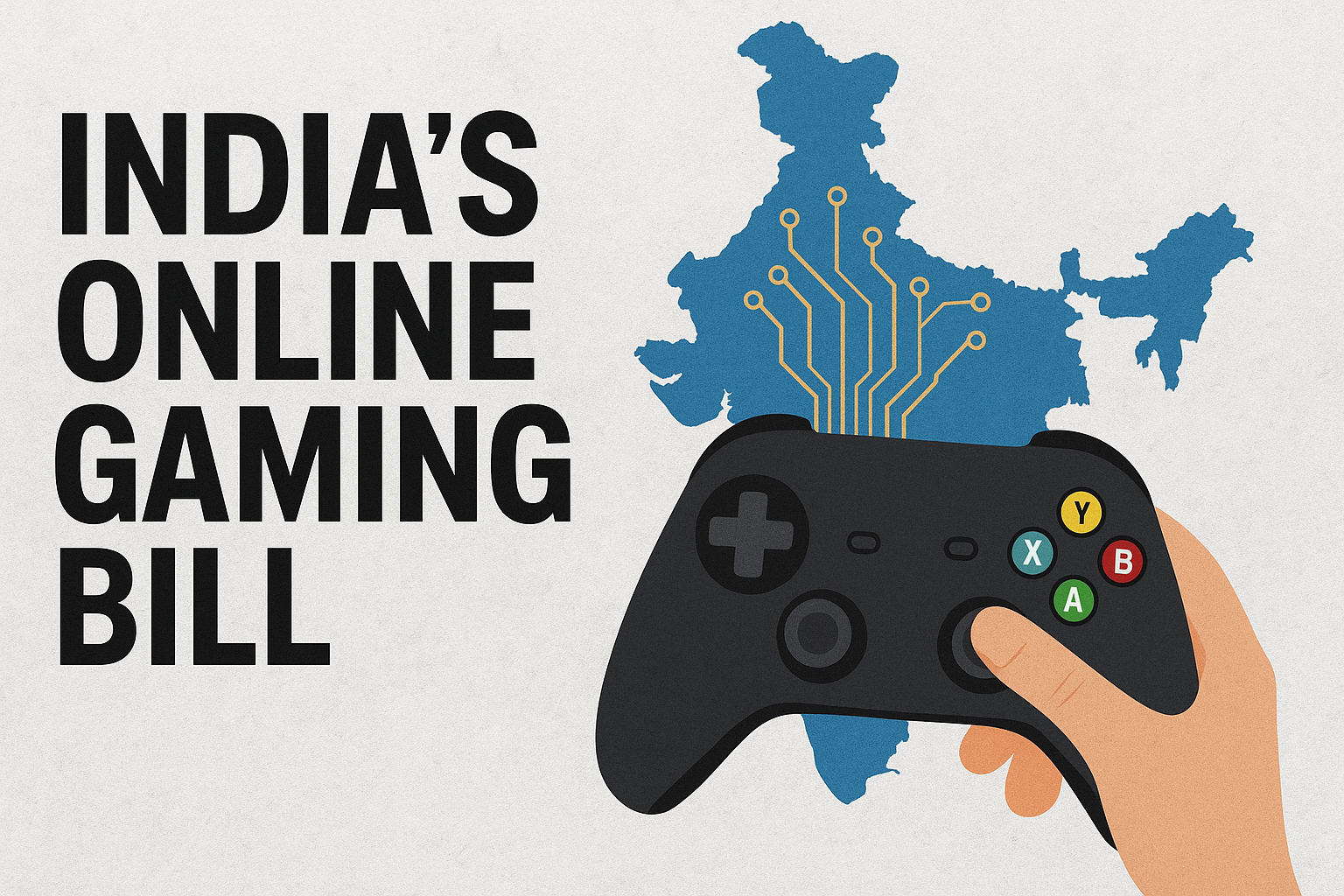
In recent years, India has witnessed an explosion in online gaming. From casual mobile games to high-stakes fantasy sports and esports tournaments, the industry has become a multi-billion-dollar segment of the digital economy. However, the lack of a unified regulatory framework has often created confusion, with states imposing varying rules on what qualifies as “games of skill” versus “games of chance.” In a landmark decision, the Indian Cabinet recently approved the Online Gaming Bill, bringing clarity and order to this fast-growing industry.
Key Features of the Bill
The Online Gaming Bill proposes a centralized regulatory framework, addressing multiple aspects:
- Licensing System – All real-money gaming platforms must obtain licenses from a central authority.
- Classification of Games – Clear separation of “games of skill” (like chess, fantasy sports) and “games of chance” (like lotteries or betting).
- Consumer Protection – Age verification, spending limits, and self-exclusion tools to safeguard users.
- Data Protection – Platforms must ensure that user data is stored in India and protected under cybersecurity norms.
- Taxation Framework – The bill outlines how GST and income tax apply to winnings, ensuring greater revenue for the government.
Industry Response
Gaming companies have largely welcomed the move. Leaders argue that a clear regulatory framework will attract foreign investments and legitimize the industry. For years, companies faced legal battles in various states—what was allowed in one region was banned in another. With national rules, the ecosystem could finally stabilize.
Concerns and Criticism
However, some concerns remain. Critics argue that the bill might impose over-regulation, potentially stifling innovation among startups. There are also worries about the definition of skill vs. chance, which has been a grey area even in the courts. Additionally, smaller startups fear that heavy licensing fees may drive them out of the market.




Global Comparisons
Countries like the UK, South Korea, and Singapore already have strict gaming regulations balancing growth and consumer safety. India’s Online Gaming Bill draws inspiration from these models but adapts them for local realities, such as high rural participation and widespread mobile gaming.
Economic Potential
If executed well, the bill could:
- Generate lakhs of jobs in gaming, animation, and esports.
- Increase foreign direct investment (FDI).
- Contribute significantly to the digital economy, with gaming projected to rival film and music in terms of revenue.
Conclusion
The Online Gaming Bill is a bold step by the Indian government to regulate a sector that has long operated in a legal grey zone. By combining consumer protection with industry growth, the bill could make India not just a huge gaming market, but also a global leader in responsible online gaming innovation. The coming months will reveal how effectively these regulations are implemented, but the foundation has been laid for a safer and more prosperous gaming ecosystem.